
The Health Care Cost Drivers

Skyrocketing health care costs are shutting people out of insurance, making care unaffordable even for those who have it, burdening the budgets of businesses, governments, and families. Health programs gets slashed. Rural hospitals are closing or reducing vital services like preventive and primary care, women’s health and pediatrics. Health care professionals face ethical dilemmas and burnout balancing care with cost.
Health cost drivers are the systemic reasons why health care prices are spiraling.

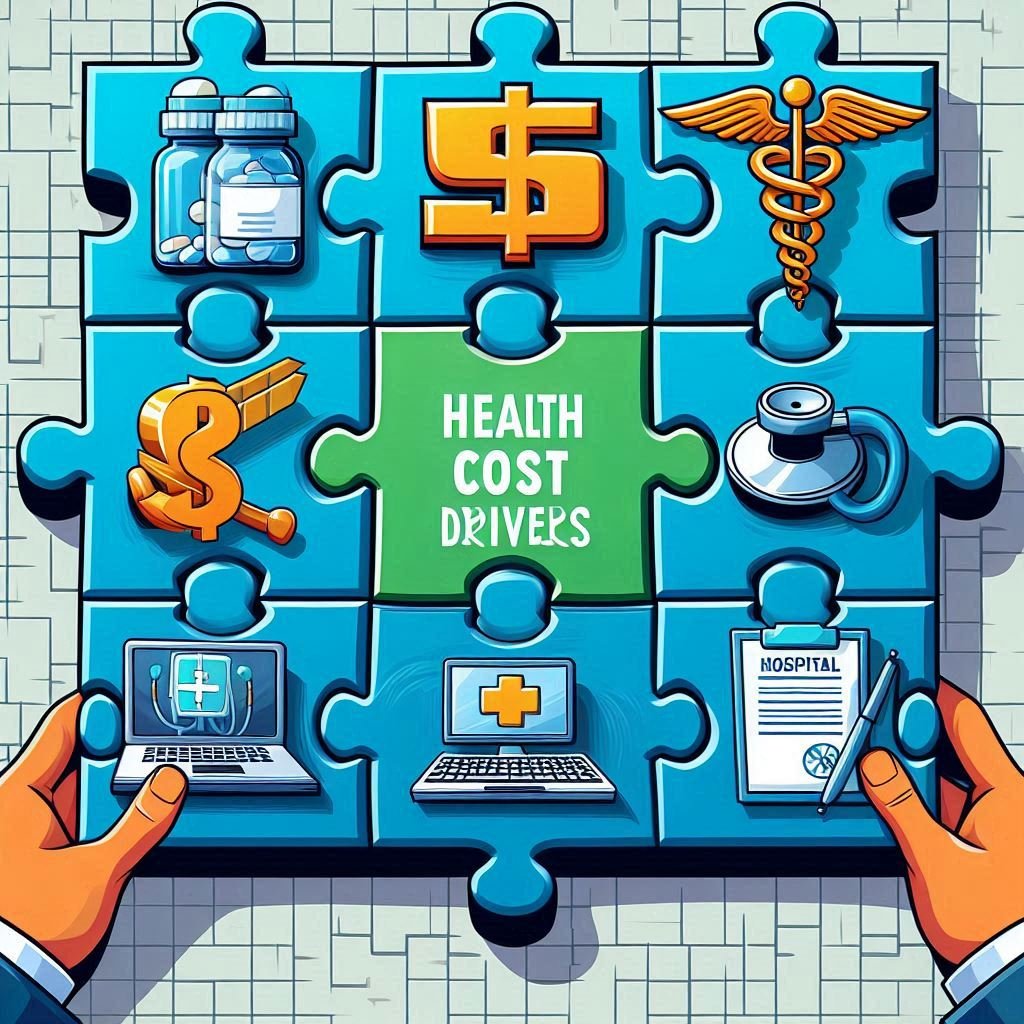
What are these cost drivers? They include: ever-rising hospital and drug expenses; complex administrative demands — many related to billing and payment, multiplied by the sheer number of health plans; and fragmented patient record systems that are neither secure nor cross-compatible. In addition to general waste, this system is ripe for exploitation. Corporate and especially venture capital acquisition of hospitals has been linked to increasing prices and decreasing care.
Countries that guarantee coverage and spend far less than the United States with better health outcomes all have cost controls. Other countries — and even some states — have successfully addressed costs with budget policy, process and rate standardization, consolidated purchasing, oversight, direct governance, and other systemic approaches.
Click here for the full cost drivers chart
Many of these frameworks are in the Health Security Plan, which would create not only statewide health coverage but a financially sustainable health system, according to three independent studies. But to really design such a system, we need to dial in the details.

The Health Cost Drivers Project
Goal
The Health Cost Drivers Project analyzes sources of rising health care costs in order to develop long-term solutions. Its simple premise is to evaluate policy innovations from around the nation and globe, and adapt them just for New Mexico.
Process
We are fortunate that New Mexico is addressing these issues through a state-funded public process. Since 2021, the Health Security Campaign and its supporters have successfully advocated for the legislature to fund this project. Both the Superintendent of Insurance and the interim Legislative Health and Human Services Committee (LHHS) have hired consultants to report on selected cost driver topics.
Click here to read the full cost driver reports
These reports can be used to update the Health Security Plan, fill in technical details that could shape its passage and implementation, or develop stand-alone policy that supports its vision.
Results So Far
Reports from state institutions, national experts, and internationally renowned universities have provided vital information on the New Mexico healthcare landscape and how some promising approaches could apply to it. that serves as a springboard to design New Mexico-appropriate policies to reign in health care costs. Here are some examples of next steps based on cost driver reports so far:
Developing a global budgets program that provides financial stability for hospitals and lowers costs.
Joining an existing drug purchasing consortium, form a drug purchasing board, or reference prices that other entities have negotiated.
Further restrict prior authorization processes that require permission from insurers and a lot of time and heartache on the part of providers, delaying or even denying care.
endgame
Beginning in 2026, we are collaborating with the University of New Mexico to use $1 million to finish the research necessary for informed reform! Working with our supporters and with allies in the legislature, we hope to see legislation over the next several years that makes crucial changes, streamlining our healthcare system around the delivery of care. The culmination of these efforts will be the reintroduction of an updated, precision-guided Health Security Act.